Campaign
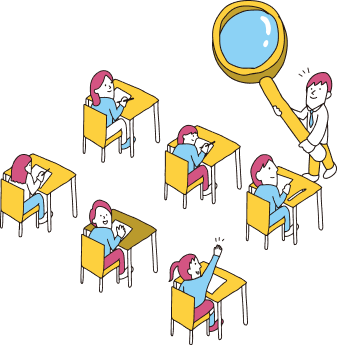
Making the invisible visible
Gakken Classroom fosters the ability to succeed in the world as an adult and to have the correct, beautiful, and sincere attitude and mind of an upstanding member of global society.

VIDEO
Joy of Learning (CM 30sec)
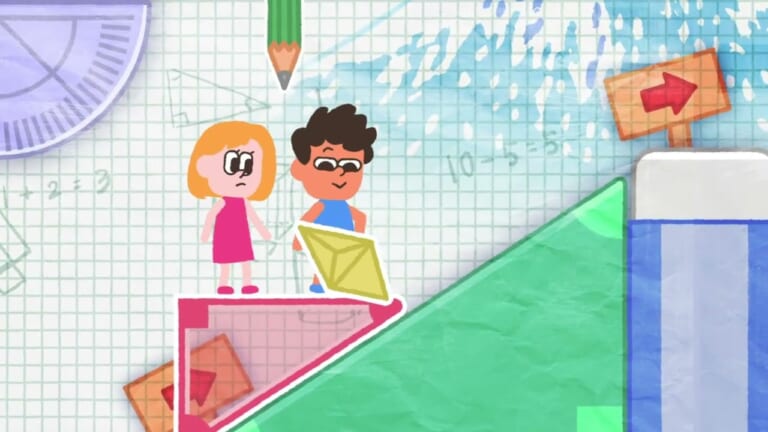
Beyond Calculation (CM 15sec)
About Gakken Classroom
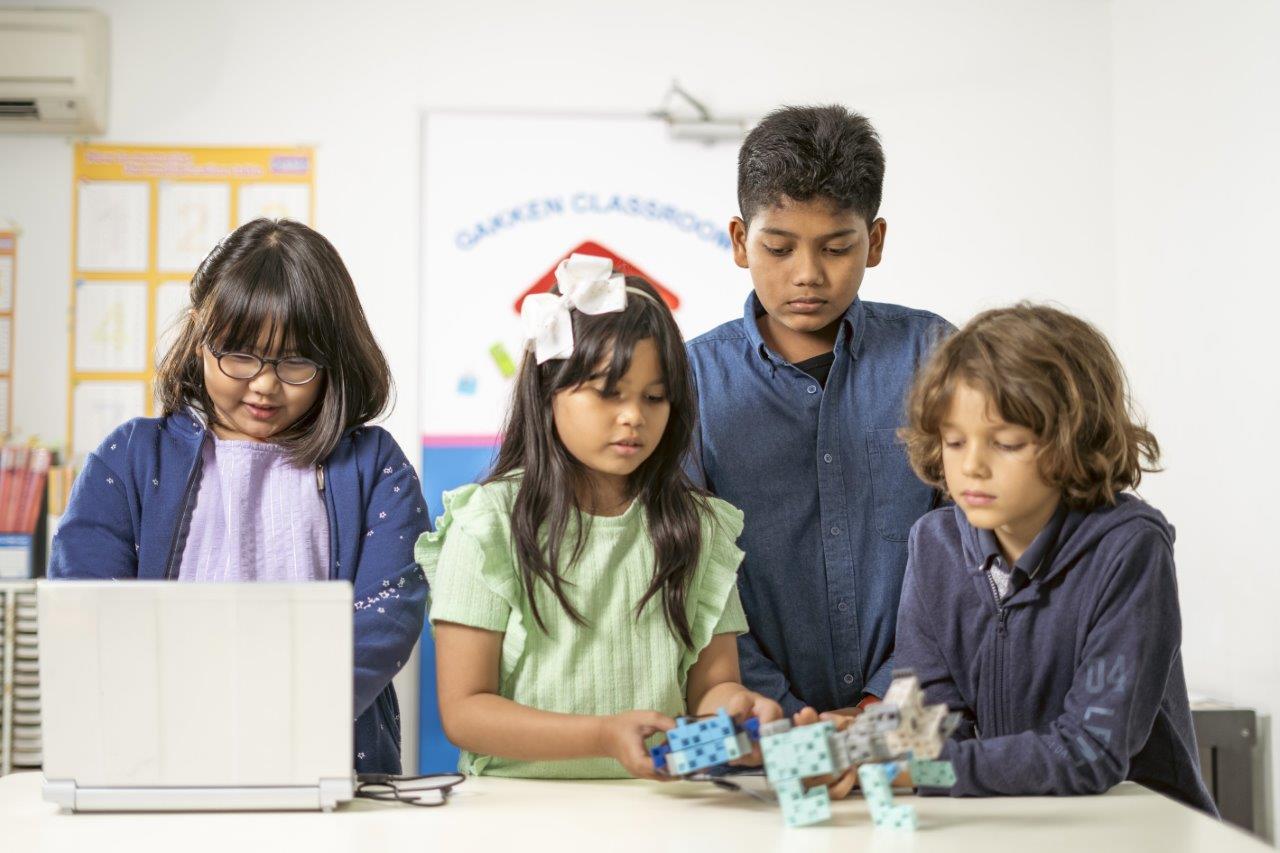
- TARGET5-12 years old
- SUBJECTMaths
- CONTENTSTwice a week and daily homework
Gakken Classroom fosters abilities and skills essential for the coming age
The Gakken Classroom brand was created in 1980 with the ardent desire to help children gain self-confidence and experience the joy of learning. Gakken Classroom currently has over 15,000 learning centers with over 420,000 members learning at them. In the face of the changing demands for education and in response to a wave of requests from abroad, we also expanded overseas in 2014.
Seeking education which suits the coming age, people around the world call for education
which focuses not just on visible skills such as test scores, but which fosters invisible skills which cannot be measured with numbers, such as logical thinking skills, zest for living, learning motivation, learning attitude and morals. Technological development and globalization offer us new opportunities. On the other hand, the fast-paced changes come with uncertainty. In the coming age, we will need invisible skills such as logical thinking skills, problem-solving skills and concentration more than ever.
Our Philosophy
Gakken Classroom fosters the ability to succeed in the world as an adult and to have the correct, beautiful, and sincere attitude and mind of an upstanding member of global society.
In order to assure that the children experience the joy of learning and gain self-confidence, the learning pace is customized according to each child’s ability. This allows solid acquisition of academic abilities. The skills and confidence they acquire through active learning will later become valuable life skills for them.
Subject
Math
Members can study all four areas of arithmetic: “Number and Calculation,” “Shapes,” “Measurement, Change, and Relationships,” and “Use of Data,” enabling them to gain a solid understanding of their schoolwork. In addition, students can study deeper content from textbooks and acquire a higher level of academic skills.
Our Original Worksheet
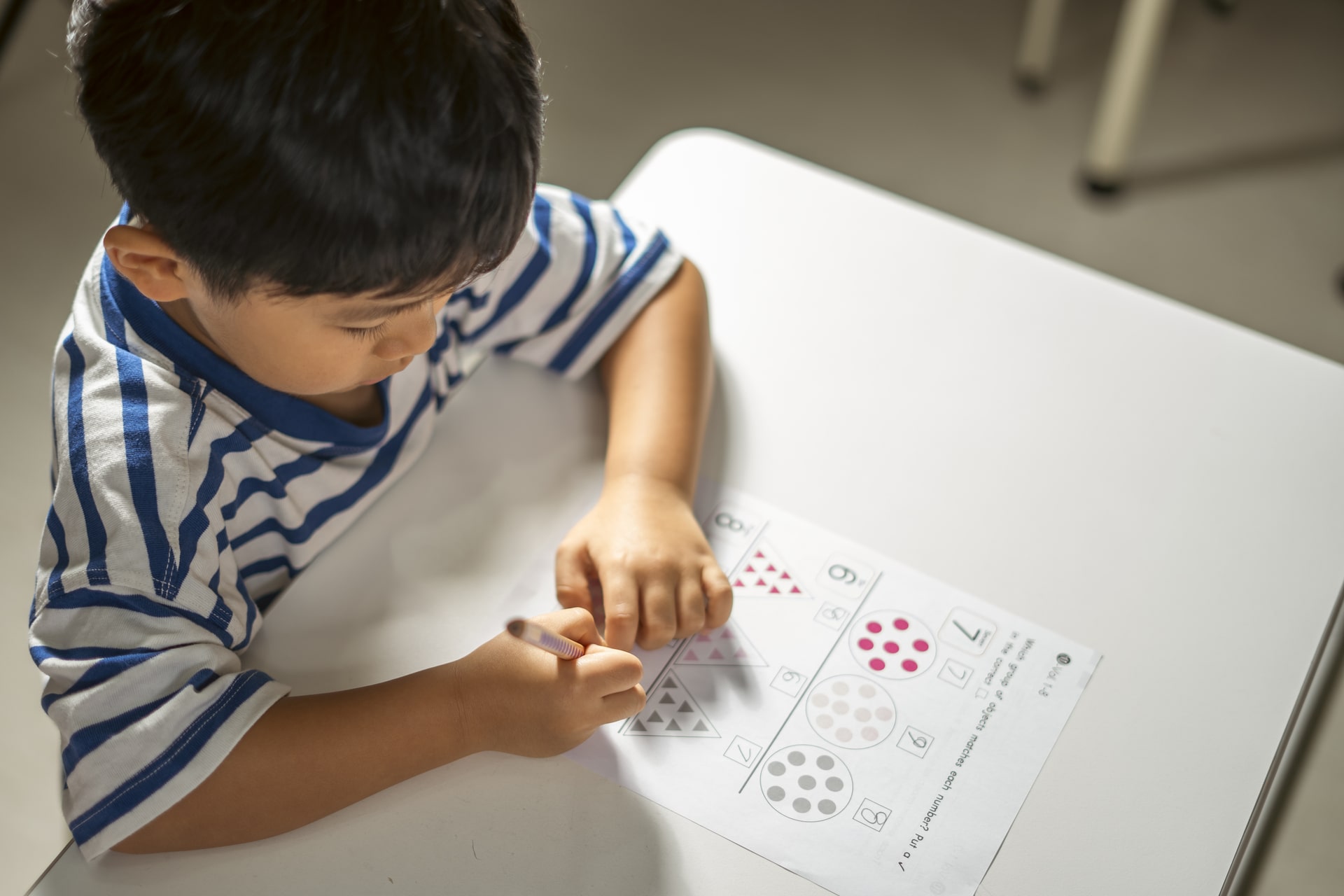
Features
Focusing on the calculation process, Our members achieve Maths skills through a genuine understanding of the concept.
Learn how to approach and solve problems with plenty of story problems.
Achieve a thorough understanding through our small step method.
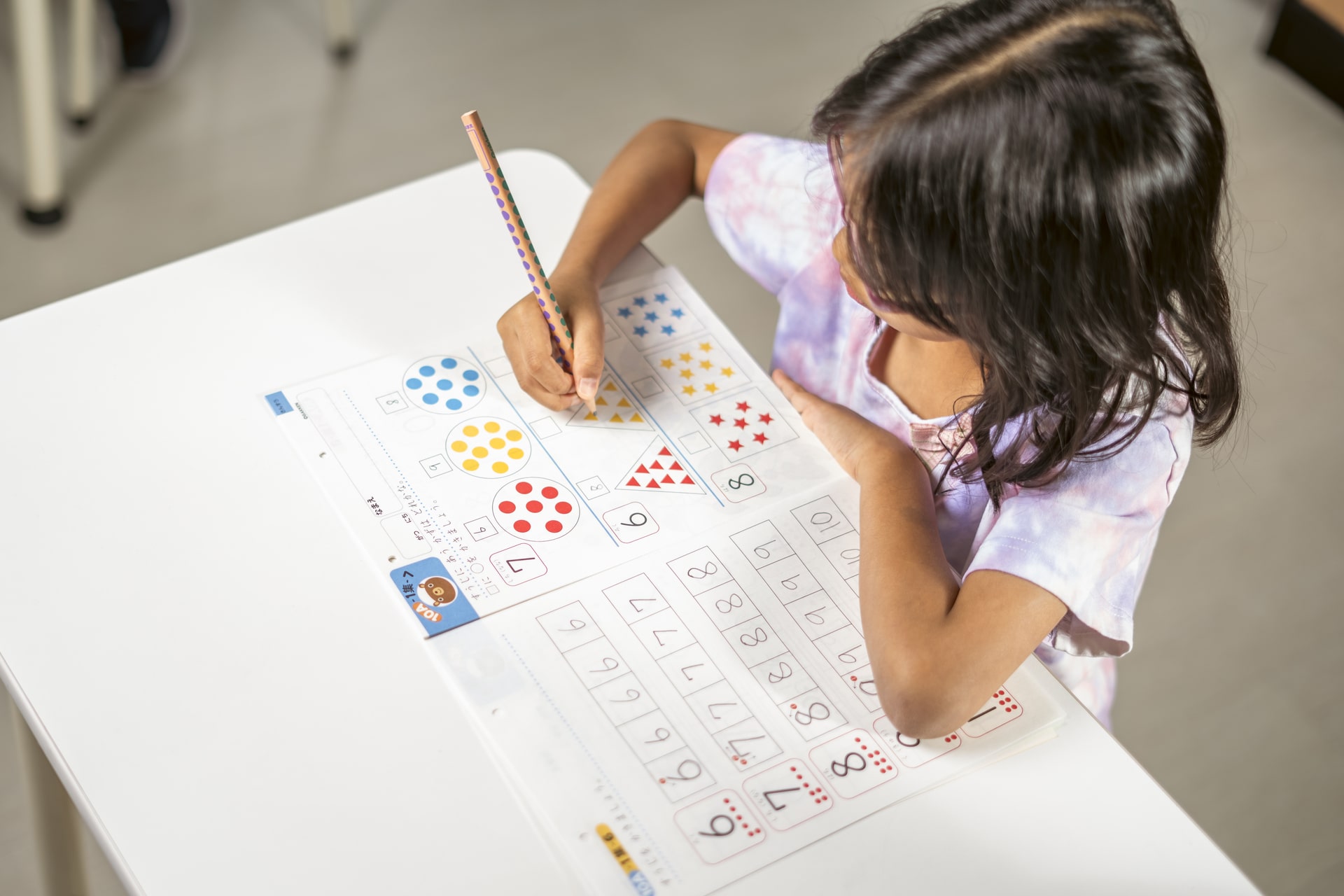
A well-balanced line-up including 4 domains of math: “Numbers nad Calculations”, “Quantities and Muasurements”, “Geometrical Figures”, and “Mathmatical Relations”
Numbers and Calculations
Children gain on understanding of process and meaning behind the target calculation before they start the excerciseds.
Quantities and Measurements
Children learn fundamental math concepts such as what an area is and various solutions to problems.
Geometrical Figures
Children practice drawing a figure with a scale, a protractor, a set square and a pair of compasses.
Mathematical Relations
Children learn how to organize given information and put it into graphs and charts.
Programming
Members can study all four areas of arithmetic: “Number and Calculation,” “Shapes,” “Measurement, Change, and Relationships,” and “Use of Data,” enabling them to gain a solid understanding of their schoolwork. In addition, students can study deeper content from textbooks and acquire a higher level of academic skills.
Cultivate logical thinking skills

Learning Effect/points
Results! Gakken's Programming Courses
Gakken is a company that has been manufacturing products for over 70 years with “children’s education” at its core. In that time, we have always been in pursuit of “a way for children to love learning. One answer is robot programming, which allows children to make realistic movements right in front of their own eyes. It is easy to start and anyone can get involved. And before you know it, you will love learning. You will see results while having fun! That’s what Gakken’s programming courses are all about.
Become interested in learning! Become interested in society!
The goal of each session is “to create, show, present, and create an original robot. The true goal, however, is to make the robot work the way you want it to, in other words, the process to the goal. To reach the goal, reading, calculation, and graphing are necessary, and knowledge of science, social studies, and music is important. Children who use texts that incorporate these elements in a complex way become absorbed in programming and absorb the subject content naturally.
You can feel the power of growth!
You hear people say, “Programming will give you the power to do 00! But is this true? At Gakken, we have conducted a questionnaire survey of the parents of our students to measure the effectiveness of our courses. The results of the survey are reflected in our courses.
They will start to face the future/future!
This course is not designed to help children become programmers, but to expand their future possibilities. For this purpose, each textbook includes interviews with a wide variety of companies in connection with the 5th grade social studies course “Japanese Industry. As a result, the course provides an opportunity for children to seriously confront their future.
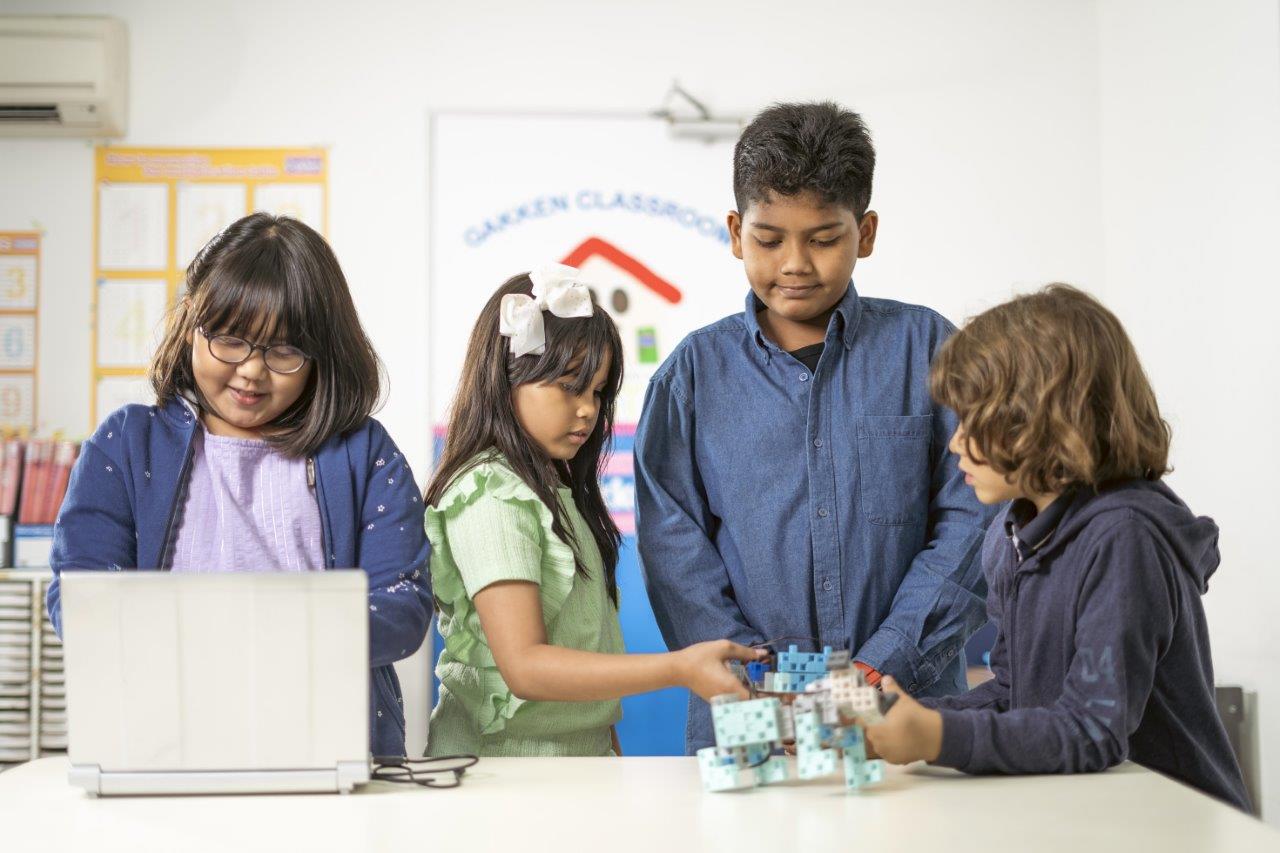
Shikumi Kids
There are two types of “Shikumi Kids” for younger children: “Shikumi Kids Debut,” which cultivates programming thinking through programming cars and puzzles, and “Shikumi Kids Wonder,” in which children program using a computer. Both programs emphasize not only the concept of programming, but also the fundamentals of “learning” such as reading, writing, and thinking. In recognition of its design that “opens the door to creativity and the future for children,” “Shikumi Kids” was awarded the 2019 Kids Design Award.
Debut
No computer required!Easy Unplugged Programming
Programming car course
An easy-to-learn curriculum that combines the Japan Toy Award-winning programming car with original cards and text. It fosters logical thinking skills as children calculate, write sentences, and investigate familiar living spaces.
Tech & Puzzle course
Students learn simple mechanisms that make things move, which is the basis of robot programming. Through “Karakuri Puzzles,” a new type of puzzle that can be solved using logical thinking and graphic/spatial thinking skills, students learn basic programming processes such as sequential, repetitive, and branching programming in a sensory way. Easy to get started with computers Visual Programming
Wonder
Introductory Robot Programming Course
Students will learn computer operations while having fun along the story of reviving an abandoned amusement park with the power of programming. Students will also learn the secrets of familiar objects and develop their expressive ability by decorating robots that have been programmed to work.
Robot Programming Problem Solving Course
A humorous detective mystery that uses the power of programming to solve the mystery. Students will read the story, figure out the problem, think logically about how to solve it, and lead to the result through a series of trials and errors. This course is connected to the “How Things Work Laboratory.
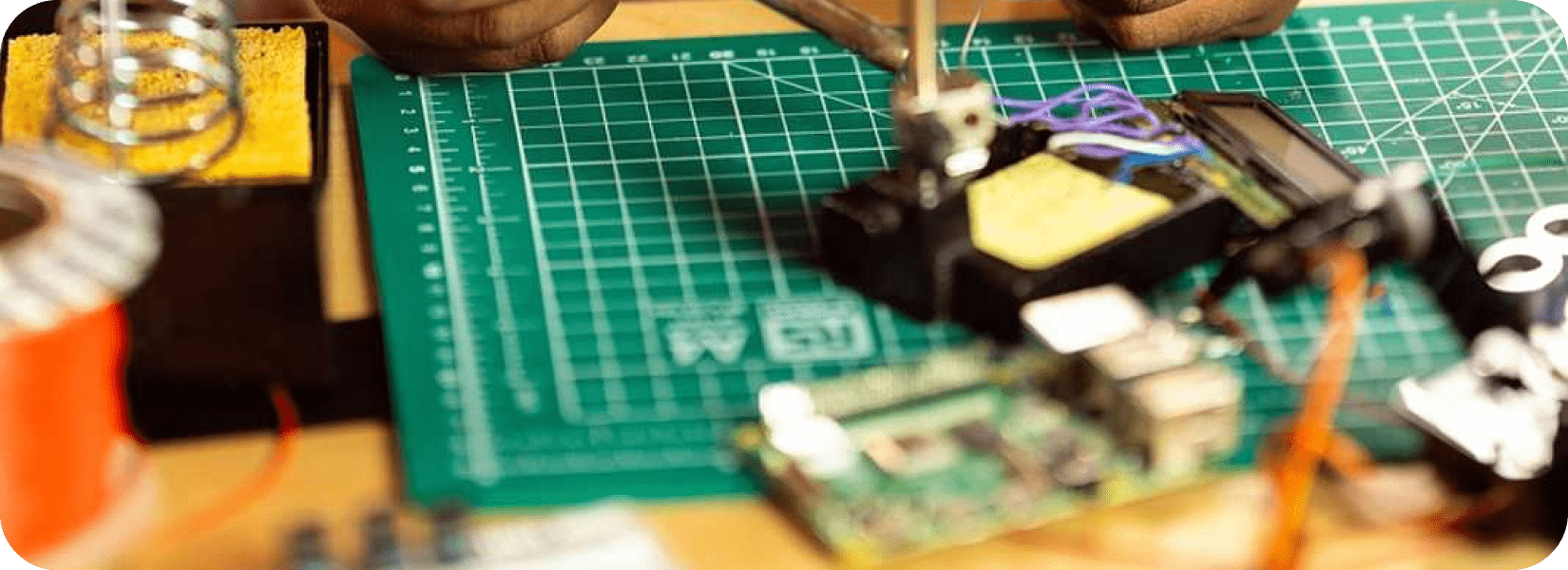
How Things Work Laboratory
The purpose of the “How Things Work Laboratory” is to learn about various “how things work” through programming, and to increase students’ motivation to learn. 36 themes for 3 years are all familiar to students. That is why students are interested in “how it works”. In addition, the subjects learned in school, such as science, math, social studies, and music, will be a strong weapon to operate the robots they build. The Mono no Shikumi Laboratory is a place where children can make use of their “learning” and where they will want to learn more. There are three courses: Developer, Master, and Innovator. Upon completion of the “Developer” course, students can move on to the “Master” course.
Developer Course
Knowing “things Making things
Students make familiar objects such as toilets, guitars, pedestrian signals, and automatic doors, and program them to move robots. Here, students learn the basic process of programming, the concept of functions and variables, and how to use motors and sensors. Students read and understand flowcharts and build original robots based on them.
Master Course
Learn how it works and create a mechanism
This is a development course based on what students learned in the first year developer course. Students will learn the movements of automatic tracking cars, railroad crossings, robot vacuum cleaners, and other vehicles, and create their own “mechanisms. Students will also try their hand at “bio-mimicry,” which involves using a robot to reproduce the “mechanics” of ants and penguins walking. Students learn to draw flowcharts and create robots with more complex movements through trial and error.
Innovator Course
“Research” and Creating the future
Students will conduct research based on the materials in the textbooks, add fun functions, and devise designs to enhance their originality.
We will also create animations and applications on the computer and link them to the assembled robots to create fun effects.
This is a course that leads to the future and future-oriented course where students conduct research and aim to create something useful for the future.
Science
Members can study all four areas of arithmetic: “Number and Calculation,” “Shapes,” “Measurement, Change, and Relationships,” and “Use of Data,” enabling them to gain a solid understanding of their schoolwork. In addition, students can study deeper content from textbooks and acquire a higher level of academic skills.

Science Experiment Course
Gakken Science Experiment has a history of more than 60 years in the field.
Our aim is to help children between the age of 5 to 12 to discover the joy of learning. The science experiments would help to nurture their sense of inquiry, creative and inventiveness.
Our science experiments are child-driven, hands-on and activity-based because children learn and understand best from what they can see, feel and manipulate. The experiments are conducted individually, in a group or demonstrated by a teacher.
Science Experiment Classroom Concept holds three principle idea on how to help a child excel in the science subject which is, Observe, Explore, and Reflect. A child learns fastest through observation from the minute they were born.

We put high value on “Why” and “How”
Observe
Group Experiment
Demonstrated by an instructor
Based on the concept of “Edutainment”, the experiments are designed to educate and entertain. They are demonstrated by an instructor. Children acan take part in the experiments by feeling with their 5 senses. This approach leaves a longer-lasting impression on students than watching science programmes on TV.
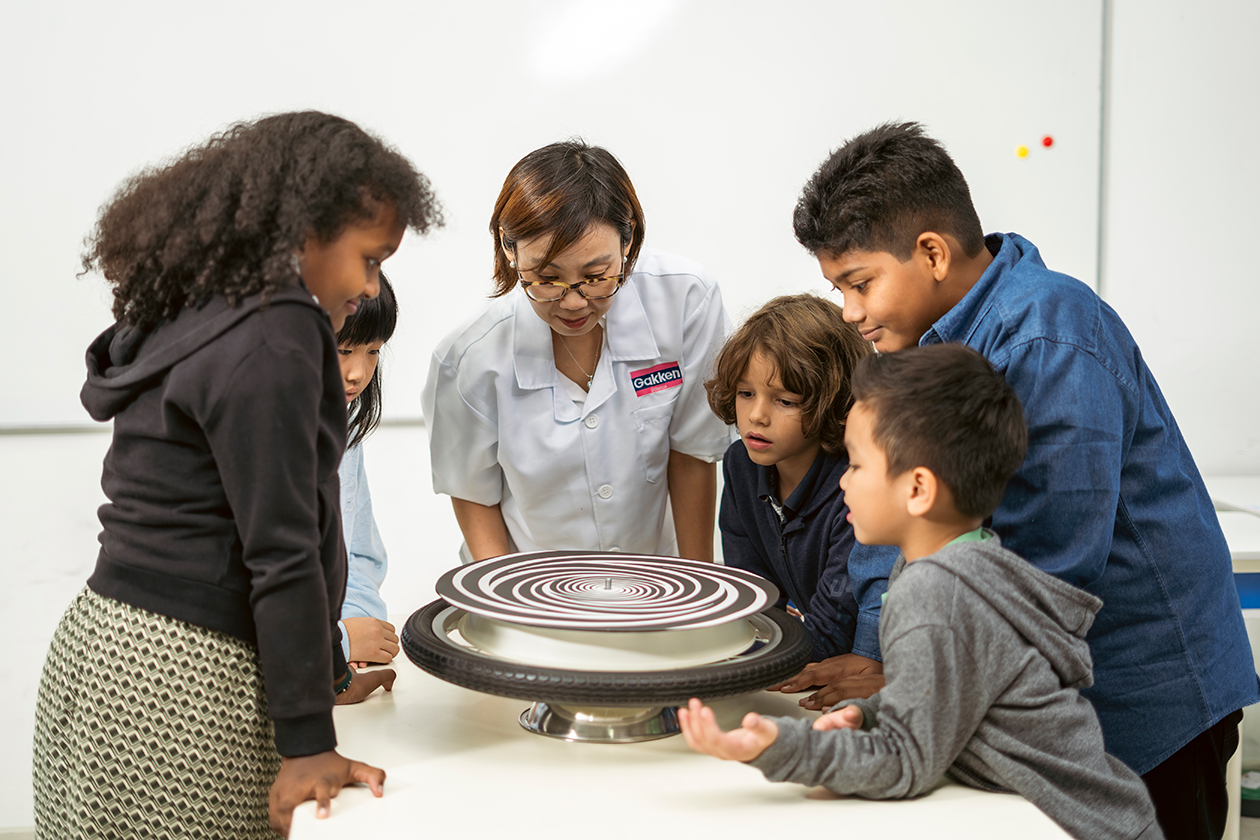
Explore
Individual Experiment
With student kit
Gakken Classroom nurtures children’s natural curiosity through fun activities like cutting, rolling and shaping. Such activities also help develop their motor skills.
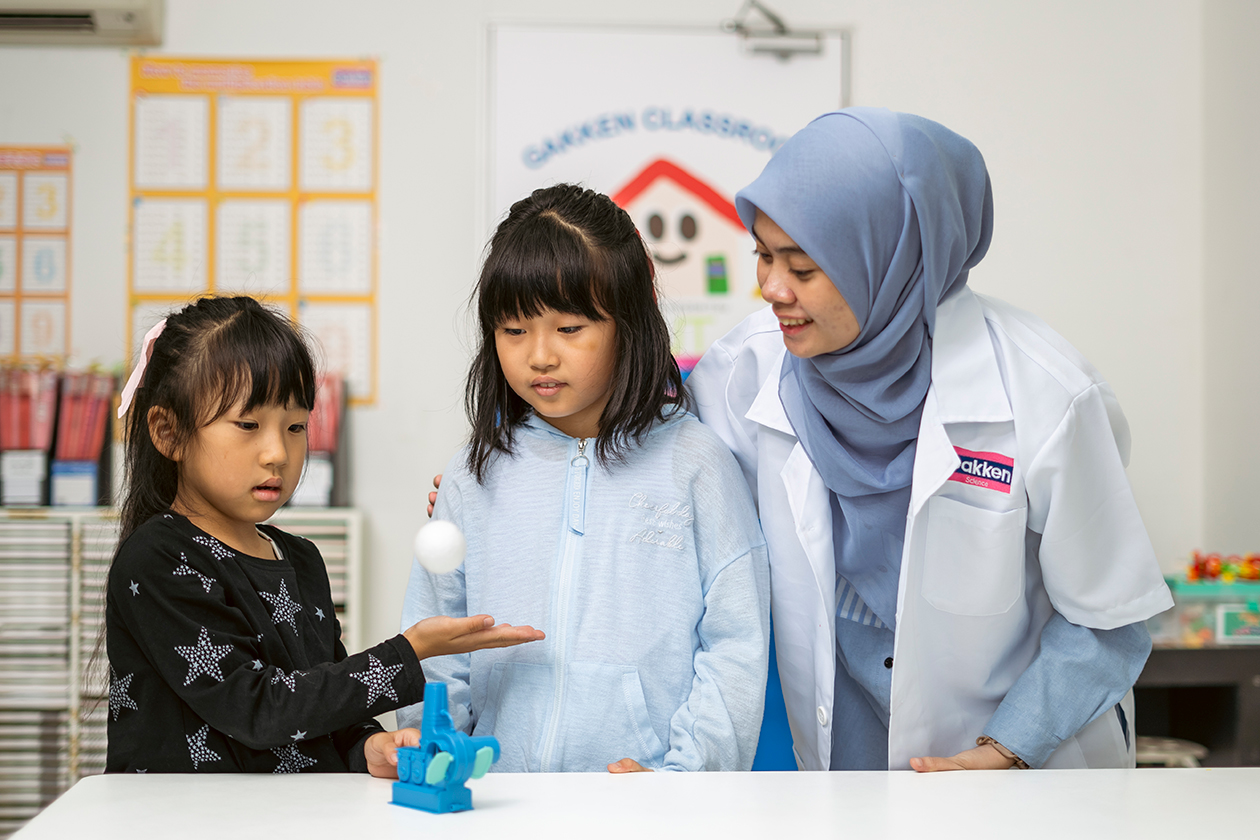
Gakken Science Experiment Course is a fun learning experience for a child and it is filled with various interesting experiments that are designed to let a child enjoy the process of learning. These experiments are done either individually, in a group, or demonstrated by the teacher. Gakken Science Experiment Course imparts their knowledge in science to children through experiments. Each of the themes, every child will get their very own science kit.
Reflect
Writing a report
Students write a report about what they have learned from an experiment. They will desctibe the most interesting thing they have observed and explain the result. They are also excouraged to draw on the report and show it to their friends and parents. All these help children to think logically and organize their throughts systematically.
Guidance Principles
Visible and invisible skills
Aspire for growth of mind and attitude and balanced academic abilities with both visible and invisible skills. Visible Skills Establish fundamental academic abilities in Maths at a world-class level. Visible and invisible skills Invisible Skills Develop 21st century skills like logical thinking skills, problem-solving skills.
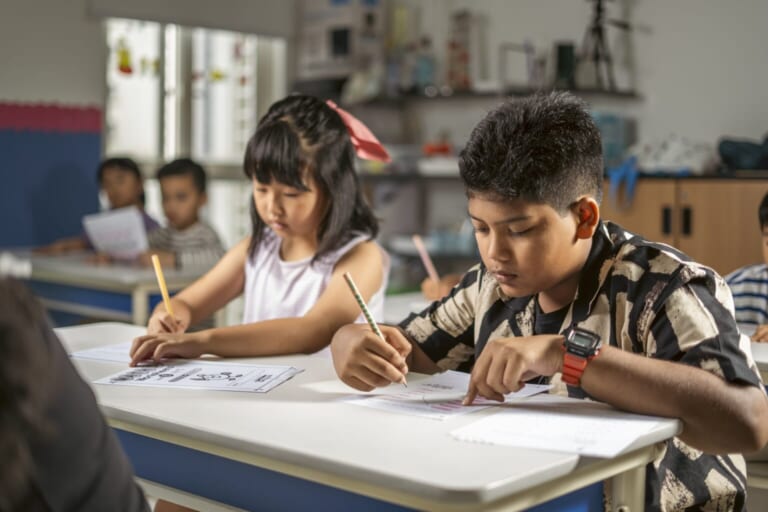
Self-learning skills
Individualize for each child’s ability and character, foster self-learning attitudes and skills.
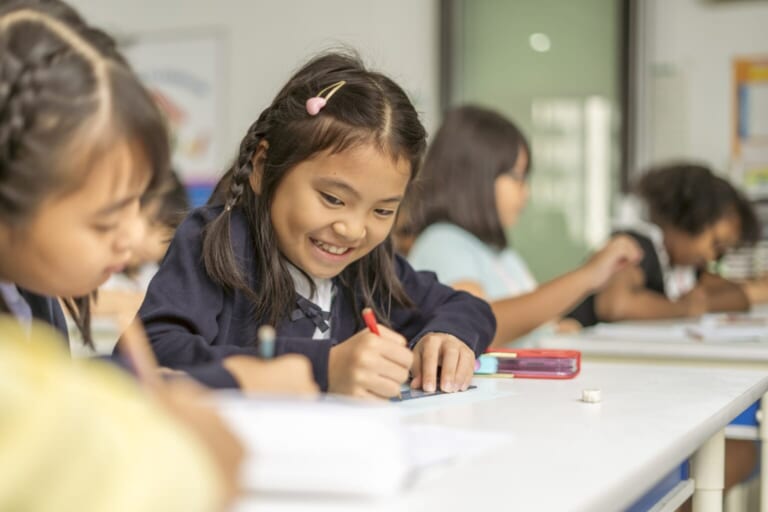
Tokuiku 徳育
Value communication, have them learn the rules of society, and ensure a well-rounded education covering, “intellect, emotion and volition.”
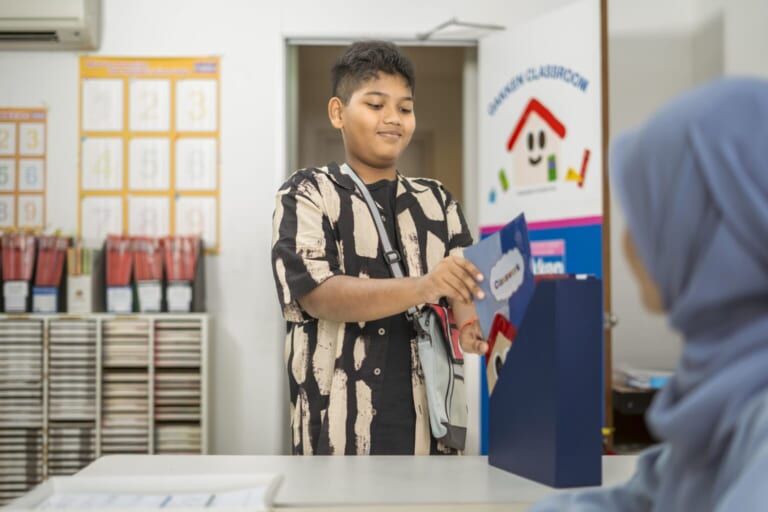
Visible and Invisible Skills
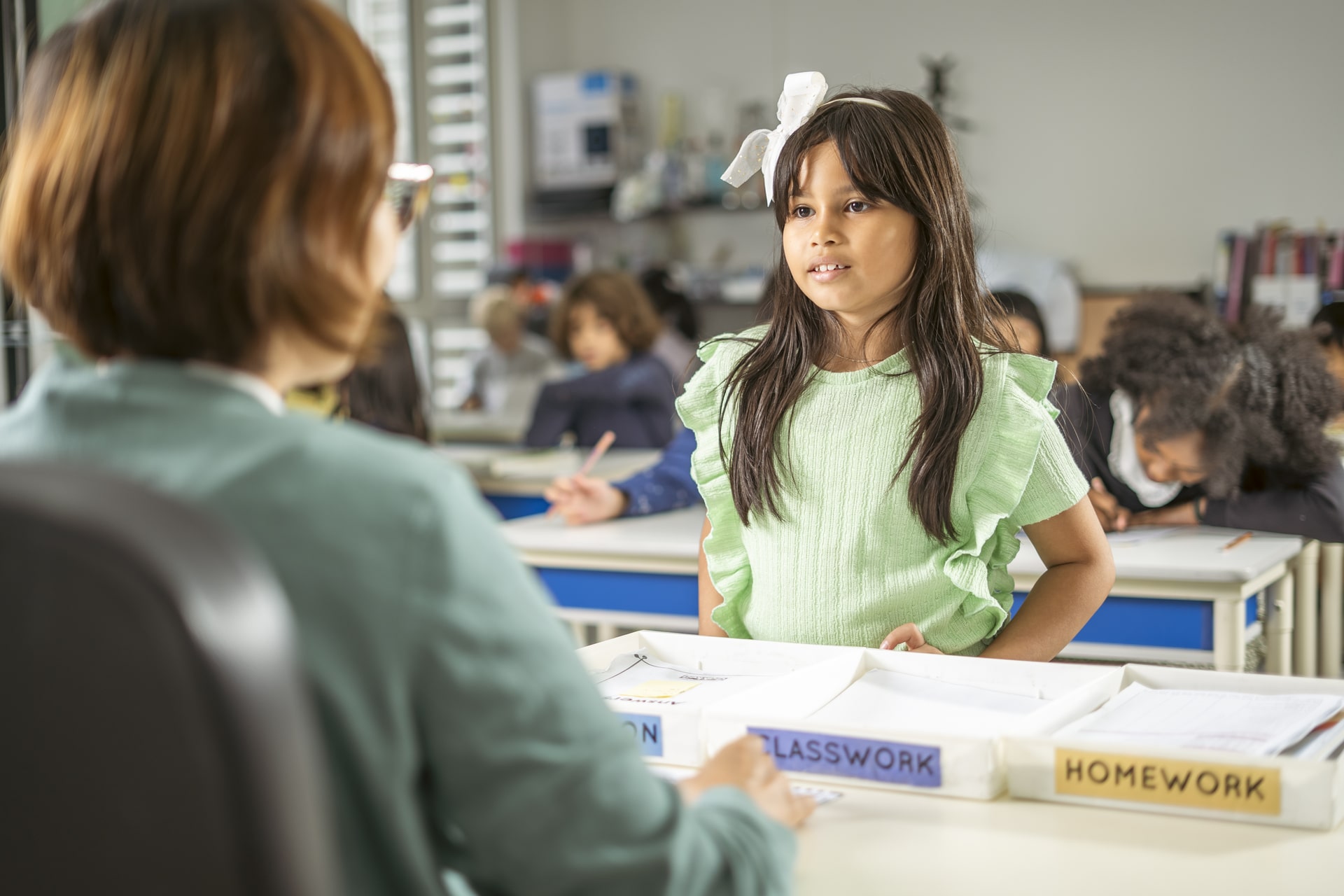
Visible and Invisible Skills
At Gakken Classroom, the children learn much more than just how to get the correct answer. Through correcting their own mistakes through trial and error, they develop perseverance, concentration and resilience, which leads to mental endurance and the ability to adapt to the situation. They learn self-control and teamwork by strictly adhering to the Gakken Classroom rules as they conduct their learning activities. These invisible skills are said to stay with you forever once you have acquired them and contribute directly toward success as an adult. To foster the skills needed to succeed in our rapidly changing world, Gakken Classroom aims to provide the children with a balance of both visible and invisible skills.
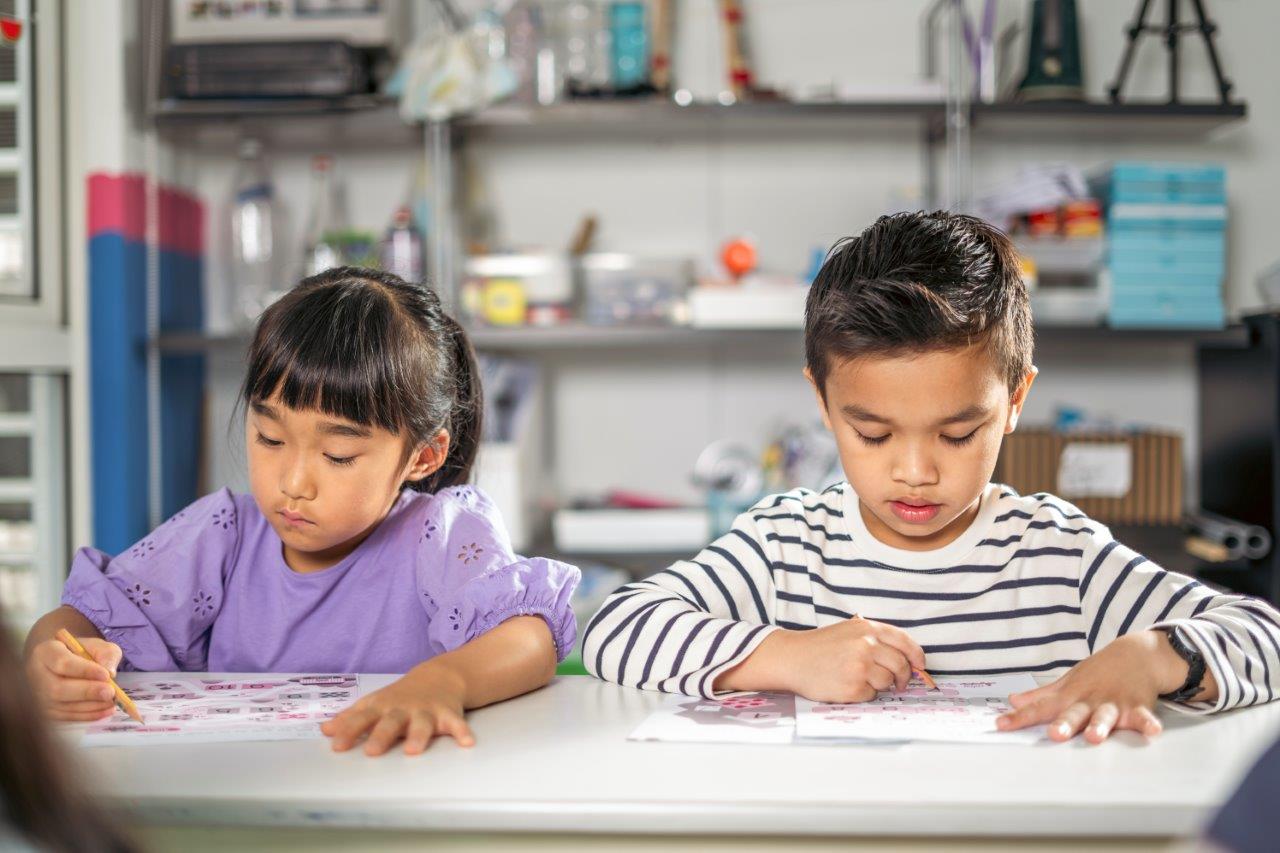
What are the non-cognitive skills getting attention from around the world?
Cognitive skills (Visible skills) are skills that can be measured with numbers; in a word, they are measured according to outcomes. In contrast, non-cognitive skills (Invisible skills) cannot be captured through numbers and are important not for the outcome itself but for the process of getting there. They are a set of skills which can enrich the future of children. Included among the non-cognitive skills are concentration, perseverance, confidence, self-esteem, leadership, self-initiative, social competence, empathy, and the list goes on. To sum them up in a word, you might call them “human qualities” or “living skills.” It is possible to build non-cognitive skills as an adult, but it is widely believed that they are most subject to growth up to around 10 years of age. Thanks to these new insights, non-cognitive skills are gathering more and more attention from around the world.
Self-Learning Skills
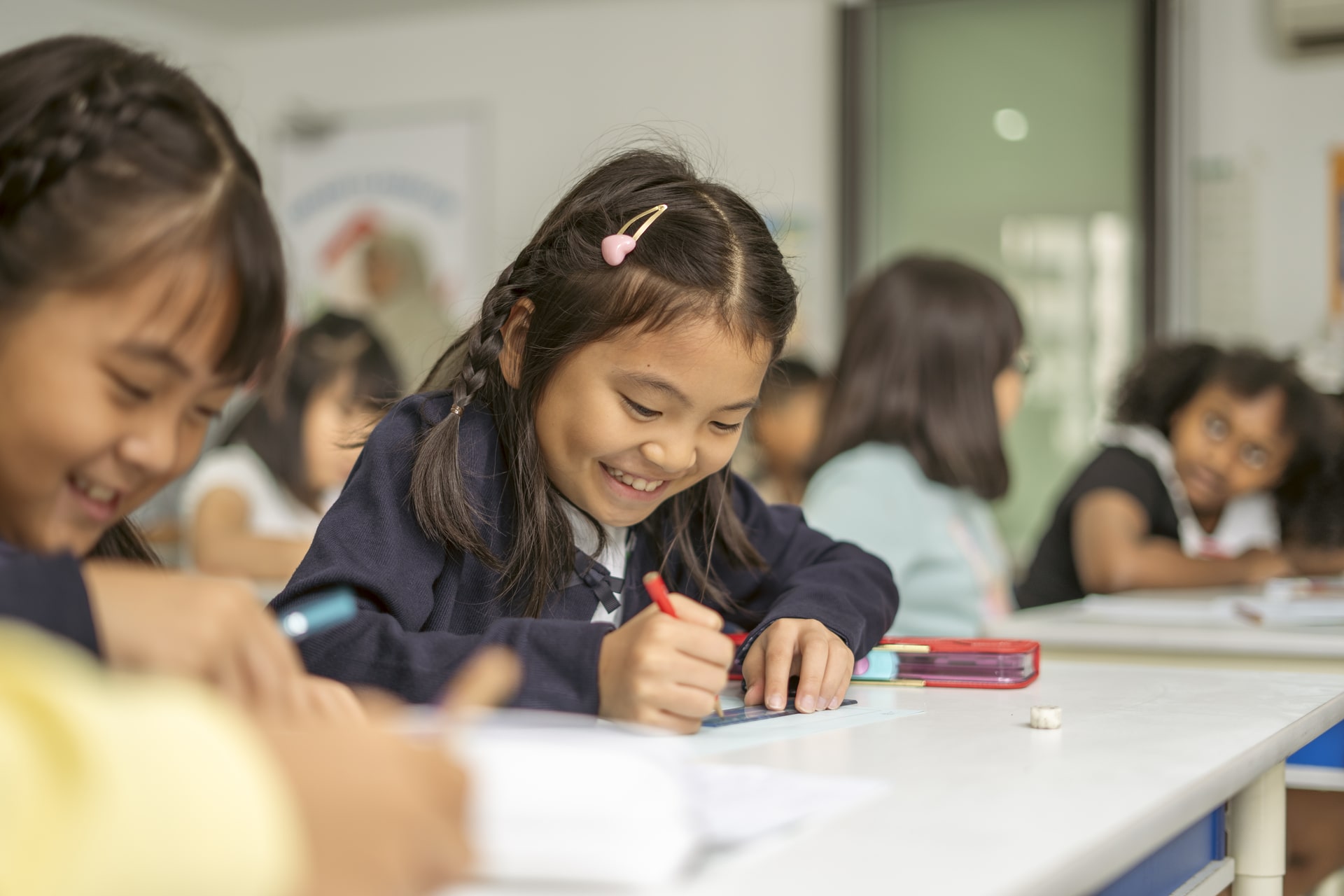
Self-Learning Skills
The importance of some things does not change with time For the “lifetime driving force” of the children Gakken Classroom’s secret to imparting “self-learning skills” is learning worksheets and learning methods designed so the children can learn persistently and by their own will, along with “Sensei” to watch over their learning efforts.
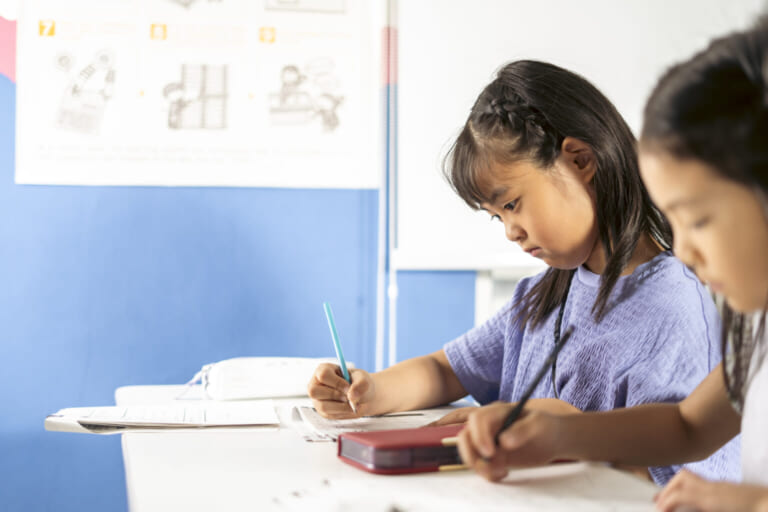
Learning Worksheets
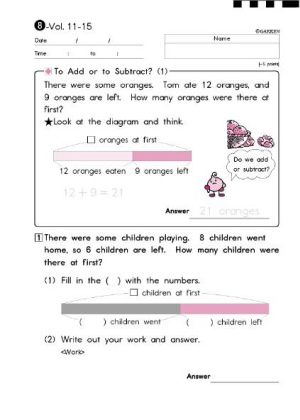
By learning the thinking process behind problem solving and based on the core academic abilities, children will acquire logical thinking skills along with the abilities to adapt and apply their knowledge to real problems.
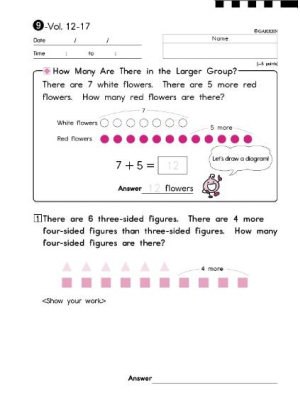
The “Guide Boxes” allow the children to get the points of the content because of their easy-to-understand explanations.
The exercise problems connect with the Guide Boxes to solidify the children’s understanding of the content.
Learning Methods
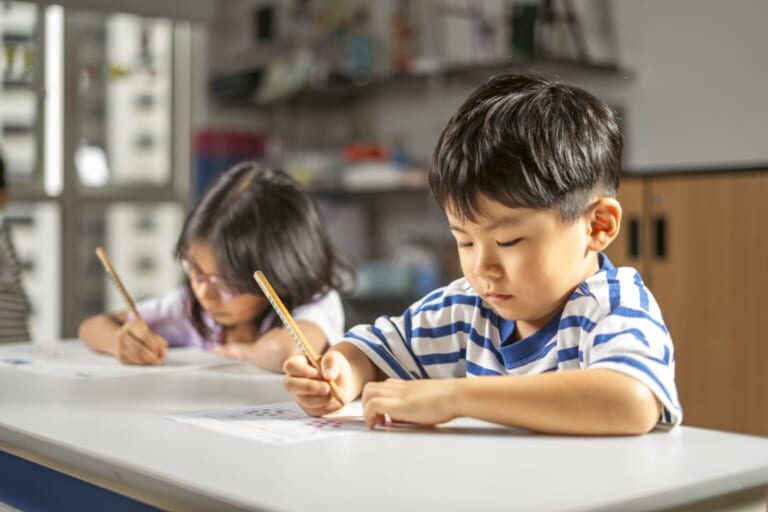
A system for engaged learning where children read through the text, think about it, and solve each problem all on their own, at their own pace. Learning worksheets which are matched to each individual’s learning progress and which focus not on “getting the correct answers” but on “understanding.” By coming to Gakken Classroom twice a week and working through learning worksheets at home on other days, the children acquire good learning habits. Furthermore, by repeating learning worksheets they finished in Gakken Classroom as homework, they solidify their understanding. By underlining sentences and reading the text in the Guide Boxes aloud, they develop their reading skills and their reading comprehension skills. Reading comprehension skills are the base of all subjects and form the foundation of thought.
Gakken Classroom's Sensei
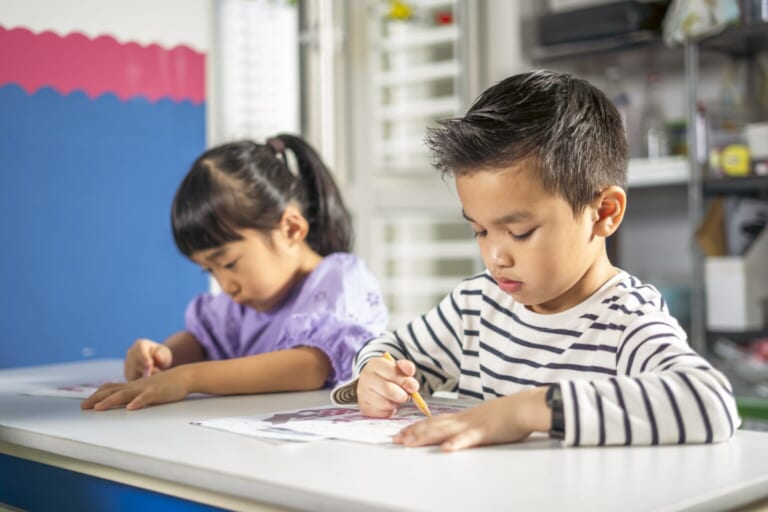
The role of the “Sensei” is not limited to helping the children improve their academic abilities (visible skills), but is also to help them acquire a balanced skill set including invisible skills such as concentration, grit and motivation. Gakken Classroom’s “Sensei” are masters of giving hints, not answers. Gakken Classroom’s Sensei don’t just teach maths, but the processes behind problem solving. With our individualized guidance, customized according to their learning progress, children learn at their own pace. This is hard to achieve with group-oriented teaching. Children learn to find solutions on their own.
Tokuiku
Gakken Classroom helps children become responsible members of society who are conscientious of and can empathize with others
Gakken Classroom nurtures not just academic abilities but also the morals which are the basis for independent individuals who can live cooperative and full lives. We believe that being able to do the common sense things we tend to neglect, working little by little each day towards a goal and manners and conscientiousness toward others will be useful in a variety of situations in the children’s future. Our focus is not merely on being able to get a 100 (i.e. to get the correct answers), but on the invisible skills needed to work at a task persistently and deliberately until its completion.
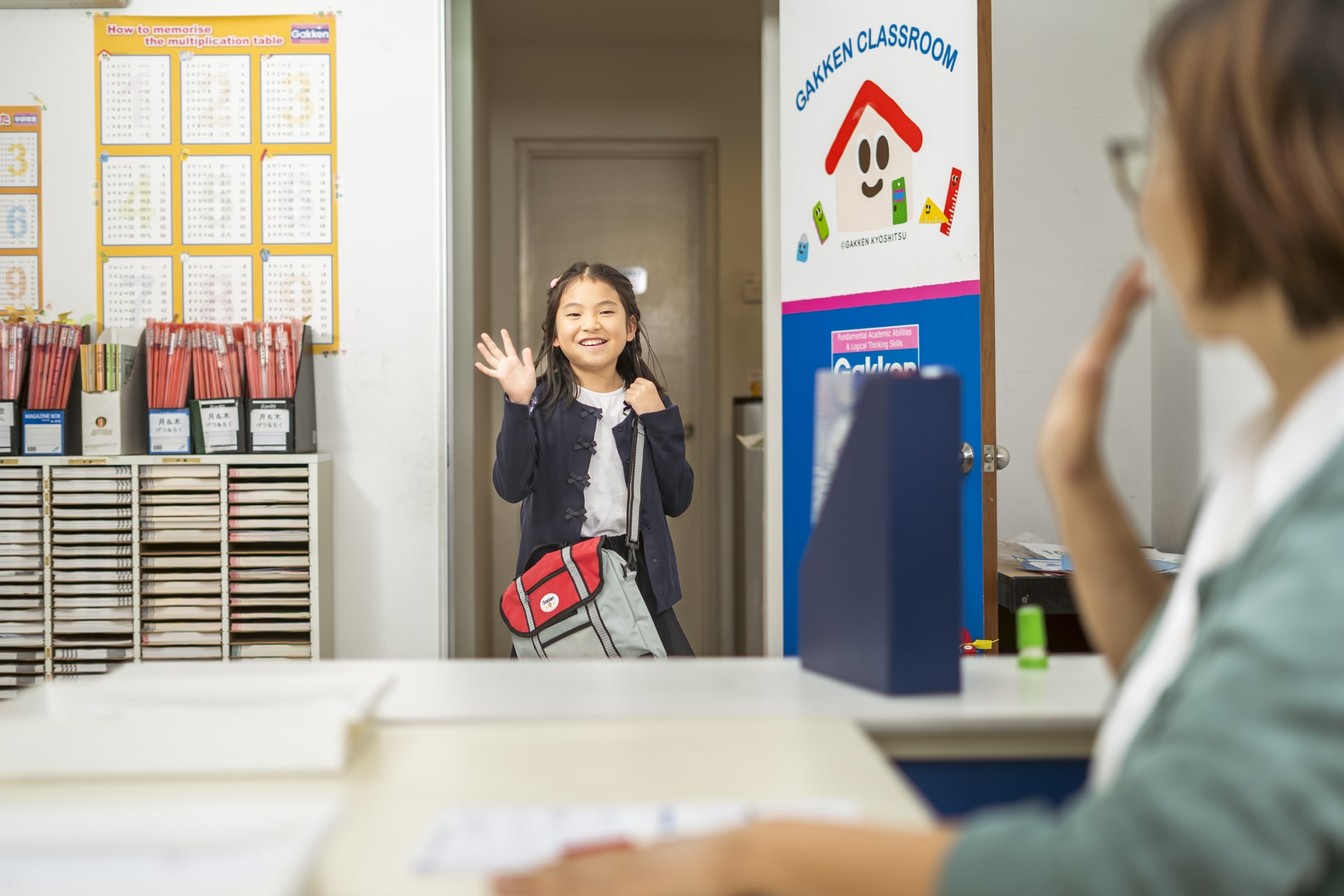
What is Tokuiku?
Tokuiku Tokuiku refers to the “character formation aimed at the development of qualities which satisfy the ideals held by society in individuals.” It serves as the foundation for any education which aims to raise individuals who possess a balance of knowledge, morals, and body.
Examples of Tokuiku
Tidy up your own shoes
Tidying up your shoes is to tidy up your mind.It also leads to conscientiousness; tidying up your own shoes makes room for others to put their shoes.
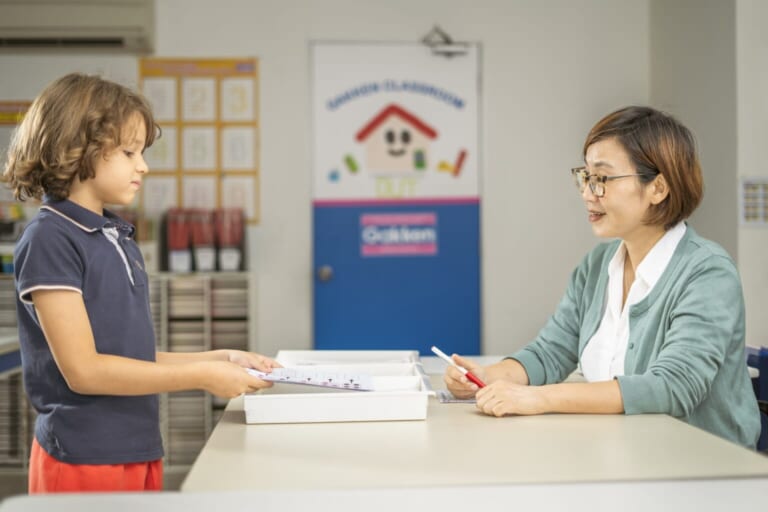
Learn with correct posture
Keeping a correct posture when learning helps to keep your mind clear and maintain concentration.
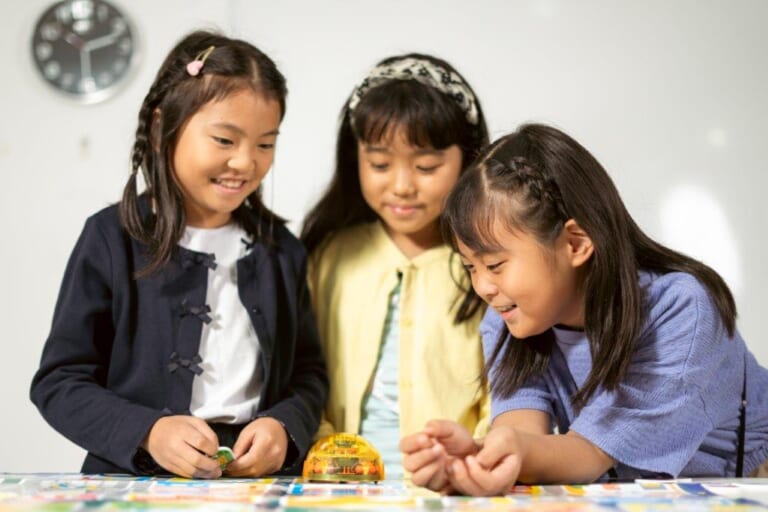
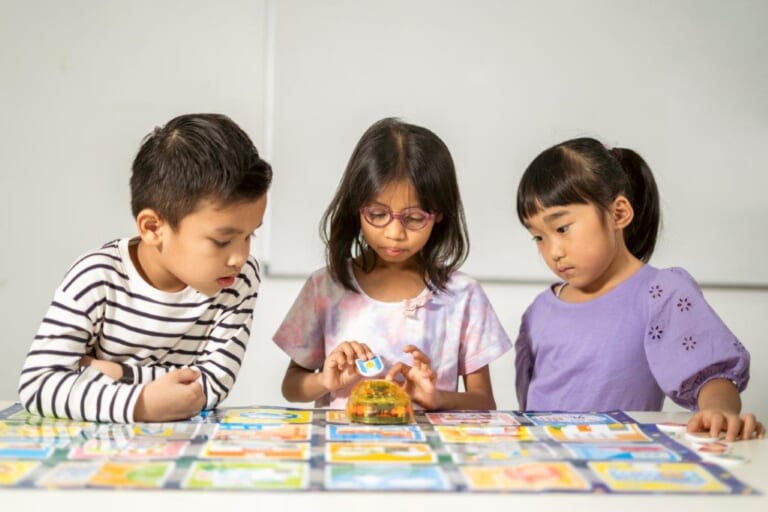
Line up in order
Staying in order means regulating your own wants and leads to greater self-control.
Clean up your desk after you finish
Cleaning up leads to consideration for the next person to use the desk and for those around you.
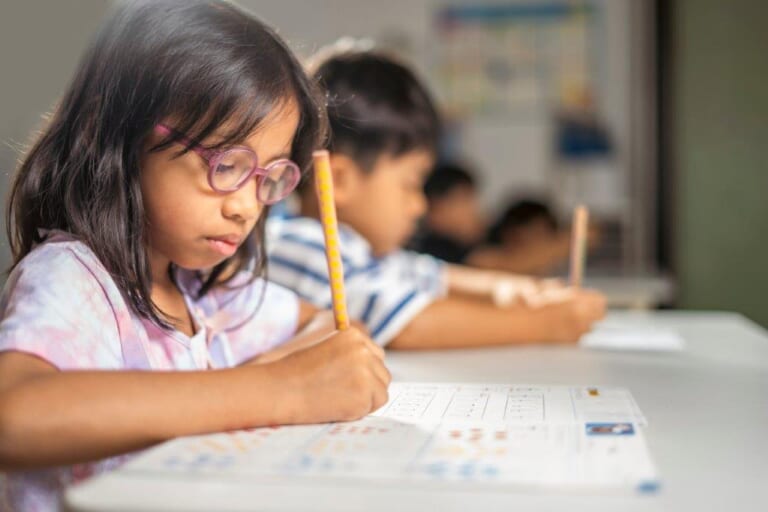
About Gakken

Since 1946
Under the strong belief of our founder, Hideto Furuoka that, “There is no path to Japan’s post-war revival except through education.”, Gakken has served as a leading company in education supporting Japan’s education since its founding more than 70 years ago in 1946, just after WWII. In addition to classroom and cram school business, it is also involved in textbooks, reference books, and child-oriented publications along with educational toys and business for the elderly, among other things. Furthermore, using the knowledge it has accumulated over the years, Gakken is currently pushing forward with a customer-centered value creation approach, principally in the domains of education and medical welfare.
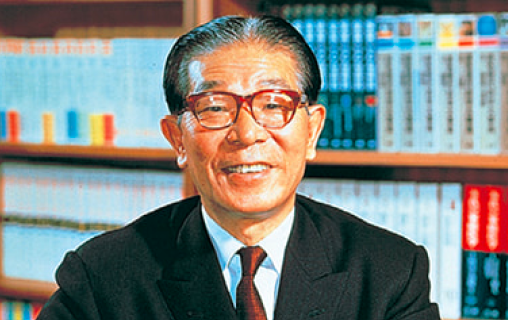
Founder's Message
Gakken is a publishing company, so its role only goes so far as creating books and putting them on display in stores. It has no way of knowing what happens when the customers read them. However, a classroom doesn’t end with the creation of learning materials, it begins with the use of the materials. Wherever that is becomes a site of education, contributes to the children’s learning, and becomes an integral place in their everyday lives, just like their home and their school. Gakken Classroom joins local communities and serves as a place where Sensei* and child, where child and child, where Sensei and parental guardian, where people meet and learn about one another. The passion and spirit for education of our founder Hideto Furuoka lives on at Gakken Classroom. * In Japan, a teacher is called “Sensei.” Sensei teaches not only subjects, but also rules and manners.
Recruiting

Becoming Gakken Classroom Franchise
We are inviting applications to open Gakken Classroom Franchise
Customers Voice